Small and medium-sized enterprises Select Singapore Cloud Server The main reasons include geographical location, network connectivity, and the legal environment. Singapore, located at a hub in Southeast Asia, connects China, ASEAN, and India. Access speeds here are superior compared to data centers in Europe and the United States ; At the same time, it boasts a rich array of local operators and international backbones, making it ideal for services targeting users in the Asia-Pacific region.
In terms of cost, data centers in Singapore generally offer more flexible pricing and promotional options than those in Hong Kong, in addition to lower latency and a wider range of availability zones to choose from ; In terms of compliance, Singapore's data protection regulations are mature yet relatively lenient, which facilitates cross-border operations.
Suitable for small and medium-sized applications that serve customers in the Asia-Pacific region and require low-latency APIs or cross-border e-commerce solutions.
If users are primarily located in the Chinese mainland, Singapore can serve as a backup or overseas location, but the primary node should still consider local access strategies.
Evaluation Value for money One should start by considering four aspects: resource allocation, billing models, network costs, and implicit fees. Don’t just look at the prices of CPU/RAM; also compare the bandwidth caps, inbound/outbound traffic billing models, costs associated with snapshots and backups, as well as the flexibility of policies for handling overloading or sudden spikes in traffic.
Priority should be given to the differences in pricing between pay-as-you-go and monthly subscription models, whether the bandwidth is billed on a peak basis, whether there is any free data usage included, as well as the disk IOPS and performance guarantees. For small and medium-sized enterprises, stable basic performance and predictable monthly costs are usually more important than extremely low peak prices.
Choosing the right instance specifications (to avoid excessive pre-reservation that results in long periods of idleness) and enabling automatic scaling and on-demand backup strategies can significantly improve cost-effectiveness.
If the average monthly bandwidth usage is predictable, it is advisable to choose a plan that includes a fixed amount of free data to reduce additional costs for excess data usage.
After-sales support response These are key considerations for small and medium-sized enterprises when choosing cloud services. It is important to evaluate the provider’s SLA, response times for support requests, available technical support channels (telephone, ticketing, online customer service, on-site support), and whether Chinese-language support is available.
Pay attention to the Recovery Time Objective (RTO) and Data Availability (SLA availability) specified in the SLA agreement. Also, review the historical processing speed of tickets, whether emergency channels are provided, and the escalation procedures for critical failures.

You can test the speed of response and the professionalism of their support by submitting fault reports or asking technical questions during the trial period ; And inquire whether there are any local partners or an operational service ecosystem available.
Written agreements take precedence over verbal promises, and clear penalty clauses and compensation mechanisms stipulated in a contract can protect a company’s interests in the event of critical failures.
Network latency and bandwidth have a direct impact on the user experience; it is therefore important to consider the geographic distribution of the target users, as well as the interconnection of network infrastructure and service providers. Singapore has advantages in the Asia-Pacific region, but when serving users from mainland China, it is necessary to take into account international export bandwidth and packet loss rates.
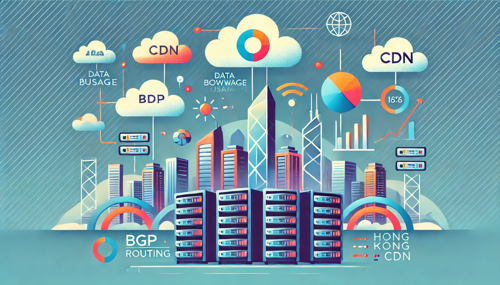
Choose a vendor that supports multiple outbound IP addresses, BGP routing, and DDOS protection ; For businesses that are sensitive to latency, CDN or edge nodes can be used to reduce access delays.
Verify whether the data relates to restricted industries such as finance or healthcare, and ensure compliance with relevant regulations ; Find out whether the data center supports data residency or provides compliance certifications such as ISO/PCI.
It is recommended to confirm with the operator the peak capacity of cross-border links, the bandwidth billing model, and the historical packet loss data, and to clearly specify the availability and bandwidth guarantees in the contract.
Deployment and migration involve cost and risk assessments, so it is necessary to plan in advance the migration window, data synchronization strategies, and rollback plans ; In terms of security, the focus is on identity management, backup strategies, and network isolation.
Phased migration can be employed: First, migrate offline or non-critical modules to verify performance and compatibility before moving on to core services ; Use remote synchronization or database replication to reduce downtime.
Enable multi-region backup, conduct regular recovery process drills, implement the principle of least privilege (RBAC), and utilize the security groups, firewalls, and log auditing services provided by cloud vendors.
By integrating automated operations tools (CI/CD, monitoring, and alerts), the cost of manual intervention can be reduced, and resource allocation can be optimized through regular reviews of instance utilization.
- Latest articles
- Popular tags
-

-

Singapore Vps Evaluation Compares The Advantages And Disadvantages Of Major Service Providers
in-depth analysis of the advantages and disadvantages of major vps service providers in singapore to help users choose the most suitable vps service. -
Seize The Promotional Opportunity And Save Money With Singapore Vps Voucher Promotion And Tips
Detailed interpretation of Singapore VPS voucher promotion timing, purchase suggestions, technology optimization and high-defense/CDN configuration and other money-saving strategies and points to note, and recommends Dexun Telecommunications, a reliable service provider.